Sonntag, 22. März 2020

Start TRAIECT III !

(English Version below!)
Ein neuer Start! Die Arbeitsphase von TRAIECT III begann mit dem Workshop am 13. und 14. Januar. Partner und Fokusland dieser Ausgabe ist Taiwan. Es gibt einige Unterschiede zu den Projekten, die bereits stattgefunden haben.
Doch werfen wir zunächst einen Blick auf die Gemeinsamkeiten: Erneut dreht sich das Projekt um Traditionelle Asiatische Instrumente mit Elektronik (im Englischen: ElectroniCs, daher das C in TRAIECT). Erneut werden acht Komponistinnen und Komponisten Neue Musik für diese Instrumente schreiben. Und erneut wird der generelle Ablauf gleich sein: Zunächst findet ein Workshop statt, in dem sowohl die kulturelle Einbettung der Musik als auch Fähigkeiten, Erwartungen und erste Ideen der Teilnehmenden ausgetauscht und präsentiert werden. Wie schon in TRAIECT II gibt es eine große Bandbreite an Nationalitäten, Altersgruppen und schließlich Persönlichkeiten, die am Projekt teilnehmen.
Was ist das Neue? Da sind natürlich einmal das Land und die Musik: Taiwan und  Pak-koán. Das klingt erst einmal nach einer kleinen Änderung, aber in der Praxis macht es einen großen Unterschied zu den bisherigen Ausgaben von TRAIECT. Niemals zuvor gab es eine solch große Optionenvielfalt, um die Elemente zu kombinieren. Es ist die erste Ausgabe, in der die Stücke für ein Ensemble und nicht für Solospieler geschrieben werden. Gleichzeitig erlaubt es die Konstellation auch, für ein Soloinstrument zu schreiben. Wie in jeder Ausgabe kommt die Elektronik als Element stets hinzu. Und mit dieser Spielweise der Musik gibt es viele Interaktionen zwischen den Spielern, was noch einmal eine weitere Ebene der Optionen eröffnet.
Um ein besseres Verständnis der möglichen Kombinationen zu erhalten und was die entsprechenden Parameter sind, werfen wir einen Blick auf die Pak-koán Musik, ihre Geschichte und die technischen Aspekte sowie die soziale Einbettung.
Die Musik wurde vor rund 300 Jahren von Immigranten aus der Fuijan Provinz in China nach Taiwan gebracht. Sie ist inzwischen tief im Han-taiwanesischen sozialen Leben Verankert, das als eines der dominanten traditionellen Musikgenres gilt. Bis zum Ende der 1960er Jahre war die Musik sogar noch dominanter, da sie zu Riten, Festivals, Zeremonien, Prozessionen, Hochzeiten und Beerdigungen aufgeführt wurde. Sie ist sehr mit den Leuten verbunden.
Generell besteht ein Pak-koán-Ensemble aus mindestens sieben Spielern. In TRAIECT III werden wir drei Instrumentalisten aus verschiedenen Gründen haben, der wichtigste davon ist die Praktikabilität für die neuen Kompositionen und die Aufführung.
Es gibt unterschiedliche Arten, Pak-koán zu spielen, sodass diese Musik vielen verschiedenen Situationen angemessen ist: Im engeren Sinn umfasst das Spektrum von Pak-koán  hì-khek (戲曲, im Folgenden “Theatermusik” genannt), iù-khek (細曲, im Folgenden “Veredelte Stücke” genannt), paî-chì (牌⼦, im Folgenden “Perkussion- und Windensemble Musik”) und phóo (譜, im Folgenden “Seide und Bambus Ensemble Musik” genannt). Die Perkussion- und Windensemble Musik und die Seide und Bambus Ensemble Musik sind Instrumentalmusiken, während die Theatermusik und die Veredelten Stücke vokale Elemente beinhalten. Im Weiteren Sinn wird  Pak-koán auch für pòo-tē-hì (布袋戲, Handpuppentheater), ka-lé-hì (傀儡戲, Marionettentheater), koa-á-hì (歌⼦戲, taiwanesische Oper), daoistische und einer Sekte indigener Buddhistischer Ritualmusik sowie verschiedener Arten professioneller Ensembles, die Trommeln, Gongs und Becken benutzen, verwendet. Die Unterschiede in den Stilen bestehen vor Allem darin, ob eine menschliche Stimme enthalten ist oder nicht. Die Perkussion- und Windensembles bestehen aus Gongs, Trommeln und Becken, die die Chhue (吹, ein zweiblättriges Blasinstrument) begleiten. Aufgrund der Chhue ist diese Art der Pak-koán Musik recht laut und wird daher auf Festen und im Freien verwendet. Das schließt Paraden von Tempelfeiern, Beerdigungszüge, Zeremonien und Aufführungen mit ein. Die Perkussion- und Windensembles sind sehr bekannt in Taiwan. In der Seide und Bambus Ensemble Musik wird eine andere Zusammensetzung der Instrumente benutzt: die „Seide“ (eine Art Geige und Lauten) und das „Bambus“ (eine Flöte). Die Geigen sind thê-hiân (提絃, auch khak-á-hiân, 殼⼦絃) genannt und hô-hiân (和絃). Beide sind zweisaitige Geigen, deren Klangkörper aus Kokosnussschalen bestehen. Im Falle der Lauten gibt es (hauptsächlich) die sam-hiân (三絃, ein dreisaitiges Zupfinstrument) und die iâng-khîm (洋琴, ein Hackbrett). Da es kein Standardensemble in Pak-koán gibt, ändern sich sowohl die Aufführungssets als auch die Orchestration der Ensembles, wie auch die Zusammensetzung der Instrumente. Obwohl die Instrumente als auch die Instrumentation zwischen verschiedenen Regionen und Ensembles wechselt, ist die thê-hiân das führende Instrument innerhalb der Seide und Bambus-Ensembles. Der dritte Stil ist die Theatermusik, die wiederum drei Substile hat. Obwohl der Name eine Theateraufführung suggeriert, existiert Theatermusik mit schauspielerischer Begleitung und auch alleinstehend, in diesem Fall dann als eine Art Geschichtenerzählung mit Musik. Die Theatermusik wird von einem großen Ensemble aufgeführt, dass das Perkussion- und Windensemble mit einem Seide und Bambus Ensemble kombiniert. Die Funktion der Musik ist es, eine Untermalung zur Geschichte darzustellen. Sprachlich unterscheidet sich die Erzählung von der Alltagssprache, sie dient der dramaturgischen Kurve des Stückes. Zu guter letzt gibt es noch die Veredelten Stücke, iù-khek. Die Bezeichnung führt auf den Stil der Musik zurück: Es wird eine Gesangstechnik benötigt, die eine erlesene Ausdrucksweise verlangt. Die Stücke sind nicht so laut als die Theatermusik oder die Perkussion- und Windensembles und können daher in geschlossenen Räumen gespielt werden. Das Ensemble besteht aus einem Solosänger oder einer Solosängerin, der / die von einem Seide und Bambusensemble begleitet wird. Er oder sie hält einen Klöppel in der Hand, um damit neben dem Gesang den Rhythmus des Ensembles zu bestimmen. Dies geschieht auch in der Vorbereitung und in Zwischenspielen, sodass das Tempo festgelegt ist.
Es ist anzumerken, dass jedes Mal, wenn eine menschliche Stimme im Stück enthalten ist, sich alle Instrumente sich in der Stimmung nach dem Gesang richten. Die Musik fokussiert sich mehr an den Beziehungen zwischen den Instrumenten und weniger an den einzelnen Spielern / Instrumenten. Des Weiteren ist es in dieser traditionellen Musik üblich, zu improvisieren. Daher spielt ein gemeinsames Wissen an musikalischen Mustern eine große Rolle innerhalb von Pak-koán. Für jedes Instrument gibt es eine bestimmte Auswahl an Mustern, die mit der musikalischen Vorgabe des Leitinstruments kombiniert werden können. Daher und gleichzeitig sind die Spieler einerseits Individuen, die frei zwischen den vorgegebenen Mustern entscheiden können, als auch Teil eines Kollektivs: Sie können über einige Teile frei entscheiden, müssen aber ebenso auf das Spiel des gesamten Ensembles achten. Zu den Individuen und den individuellen Stilen ist zu sagen, dass eine Spezialität dieser Musik der oder die Lehrer*in ist, denn der Stil der Spieler ist durchaus abhängig von der Lehre. Das macht die Kommunikation und ein gefestigtes Wissen der Muster jedes Instruments sehr wichtig. Bei den meisten Aufführungen werden die Rollen fest vergeben, an die sich alle Beteiligten vor und während der Aufführung anpassen. Da es  möglich ist, die Rollen stets zu tauschen, kennen die Spieler viele Perspektiven der Vorführung, was es für die leichter macht, zu kommunizieren und zu erahnen, welches Muster als nächstes gespielt wird. Die Instrumente sind selten in genau derselben Stimmung gestimmt. In unserem Workshop zeigten die Instrumentalisten, wie lange es dauert, damit beide Instrumente denselben Ton erzeugen, wobei klar wurde, dass das während einer normalen Aufführung nicht der Fall ist. Schließlich ist anzumerken, dass Pak-koán bis vor kurzem ausschließlich von Männern gespielt wurde. Erst die Generation der heutigen Lehrenden ist diejenige, zu der erstmals Frauen als Spieler zugelassen sind. Traditionelle Musik bedeutet nicht, dass starr mit zeitgenössischer Entwicklung umgegangen wird. Das Ensemble „Water Stage“, das in TRAIECT III spielen wird, besteht aus zwei Frauen und einem Mann, deren Interview Gegenstand des nächsten Blogeintrags sein wird.
Wir sind sehr gespannt über die Zusammensetzung und die nun geformte Gemeinschaft aus elf Teilnehmern, die neue Stücke für diese traditionelle Musik erschaffen werden. Eine Menge Faktoren müssen beachtet werden. Der Workshop diente nicht nur als eine technische Beschreibung und als Präsentationsplattform, sondern auch um die eher latenten und empfindlichen Eigenheiten der Musik zu erklären, wie etwa die soziale Einbettung und wie man Pak-koán heutzutage spielt. Die Ergebnisse dieses Arbeitsprozesses werden wir im November hören. Bis dahin wünschen wir Allen eine gute, fruchtbare Begegnung mit dem Neuen!
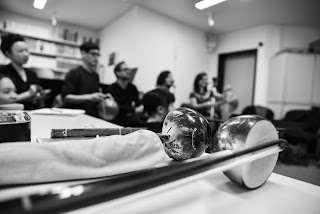
hgnm | TRAIECT III, 2020
photo: © Farhad Ilaghi Hosseini


hgnm | TRAIECT III, 2020
photo: © Farhad Ilaghi Hosseini

 
hgnm | TRAIECT III, 2020
photo: © Farhad Ilaghi Hosseini

A new start! The work phase of TRAIECT III lift off with the workshop that took place on the 13th and 14th of January. This edition’s partner and focus country is Taiwan. There will be some differences to the previous projects.
But let us first concentrate on the similarities: Again it is about Traditional Asian Instruments with EleCTronics. Again, eight composers are going to write New Music for these instruments. And again the general procedure will be the same: First comes a workshop, to show the cultural embedding of the music, the skills, the expectations and the first ideas of all the participants. As in TRAIECT II there is also a big variety of nationalities, age groups and in the end personalities collaborating.
So what is new? Of course the country and the music: Taiwan, with Pak-koán music. This might sound moderately small but in practice means a huge difference to the previous editions of TRAIECT. Never before was there such a wide range of options to combine elements. This is the first edition in which pieces get written for an ensemble and not for solo players. Additionally to that, all of the players can play all the instruments within the ensemble. The setting also allows to write for a solo instrument. As in every project, the electronics also gets into the mix. And with this kind of music there are a lot of interactions between the players, which opens yet another layer of options.
To have a better understanding of what these combinations can be and what the variables are, we will have a look on Pak-koán music, the history, the technical aspects and the social embedding.
The music was imported around 300 years ago by immigrants from the Fuijan province, China. It is now deeply rooted in Han Taiwanese social life as it is considered one of the dominant traditional music genres. Until the end of the 1960 it was even more dominant, accompanying many events such as rites, festivals, ceremonies, processions, weddings and funerals. The music is very connected to the people.
In general, a Pak-koán Ensemble consists of at least seven players. In TRAIECT III there will be three performers due to many reasons, the most important one is practicability for the new compositions and the staging.
There are different styles to play Pak-koán, so the music can fit these and even more situations: In a narrow sense, the scope of Pak-koán includes hì-khek (戲曲, hereinafter ‘theater music’), iù-khek (細曲, hereinafter ‘refined songs’), paî-chì (牌⼦, hereinafter ‘percussion and wind ensemble music’), and phóo (譜, hereinafter ‘silk and bamboo ensemble music’). The percussion and wind ensemble music and the silk and bamboo ensemble music are instrumental music, while the theater music and the refined songs are vocal music. In a broad sense the music is also used in pòo-tē-hì (布袋戲, hand puppet theater), ka-lé-hì (傀儡戲, stringed-puppet theater), koa-á-hì (歌⼦戲, Taiwanese opera), Daoist and a sect of indigenized Buddhist ritual music, and various styles of professional ensembles which utilize drums, gongs and cymbals. The differences in the styles consist mostly of the instruments used and if there is vocals or not. The percussion and wind ensemble consists of gongs, drums, and cymbals which accompany the Chhue (吹, a double-reed wind instrument). Due to the Chhue it is a quite loud style of Pak-koán and because of that played at festivals and outdoors. This includes parades of temple festivals, funeral processions, ceremonies and performances. Percussion and wind ensemble style is very common in Taiwan. In silk and bamboo ensemble music, a different set of instruments is used: the ‘silk’ (fiddle and ludes) and ‘bamboo’ (the flute). The fiddles are thêhiân (提絃, also called khak-á-hiân, 殼⼦絃) and hô-hiân (和絃). Both of them are two-stringed fiddles with resonators made of coconut shells. Of the lutes, there are, mainly, sam-hiân (三絃, the three-stringed plucked-string instrument) and iâng-khîm (洋琴, hammered dulcimer). Since there is no standard ensemble in Pak-koán, the performing setting and orchestration of pak-koán ensembles are varied as well as the musical instruments. Although the instruments and instrumentation vary between regions and ensembles, the thê-hiân is the leading instrument in the silk and bamboo ensemble. The third style is theater music, which has three sub-styles. Although the name implies a staged performance, there exists theater music with staged performances and with non-theatrical performances, i. e. a story-telling with music. Theater music is accompanied by a large ensemble that combines a percussion and wind ensemble with a silk and bamboo ensemble. The function of the music is to provide music to a story. The language used is different from the one in everyday life, it serves the dramatic curve of the pieces. Last but not least there is the style of Refined Songs, iù-khek. It is a special term that refers to the style of the music: A singing technique that requires a delicate expression. The songs are not as loud as theater music or percussion and wind ensemble music and due to that can be played indoors. The ensemble consists of a solo singer, who is accompanied by a silk and bamboo ensemble. He or she is holding a clapper during the singing to lead the rhythm of the ensemble. This is also being done during preludes or interludes, so that the tempo is set.
There is to note, that every time when there is vocals in a piece, all other instruments are being tuned according to the singer. The music is more about the relationships between the instruments and less about the single players / instruments. Furthermore, in this traditional music there are parts of improvisation. Due to this, a collective knowledge of patterns play a huge role within Pak-koán. This means that there are some patterns for each instrument which can be combined according to what the lead instrument is about to play. Because of that, the players are at the same time individuals and an orchestra: they can in parts decide themselves what they are about to play but also have to be aware of what the entire ensemble is about to do. Concerning the individuals and individual styles, a specialty of the music is the teacher, because the style is quite dependent on the teaching. It makes communication and a solid knowledge of the patterns very important. In most of the performances there are fixed roles, to which all others adapt before and during the staging. Because the roles are always changing, the players know a lot of perspectives of the performance, what makes it easier for them to communicate and anticipate the next pattern that is going to be played. The instruments are very rarely tuned exactly the same way. In the Workshop of TRAIECT, the players presented how long it takes to play the exact same pitch, making it clear that this does not happen during a normal piece. Last but not least there is to note that Pak-koán was played by men only until quite recently. The generation of the nowadays teachers is the first one to have women as players. Traditional music does not imply a rigid and unmoving dealing with contemporary development. The ensemble “Water Stage” of TRAIECT III will consist of two women and a man, whose interview will be the focus in the next entry.
We are very excited about the setting of the now formed group of eleven participants, who are going to work on new pieces for this traditional music. A lot of factors are to be monitored. The workshop served not only as a technical description and showcase event but also to explain the more latent and sensitive attributes of this music, like social embedding and the way it is played nowadays. Results will be heard in November. Until then we wish everybody a good, fruitful encounter with the new!

Dienstag, 12. März 2019

Fin TRAIECT II

Von links ( from left) : Tobias Klich, Shadi Kassaee, Mehdi Jalali, Joachim Heintz, Yasamin Shahhosseini, Fariba Alipour, Arsalan Abedian, Ali Radman, Dilxat Dawut.

Vielen Dank allen Beteiligten für ein großartiges TRAIECT II!

Thanks to all those who participated in a wonderful TRAIECT  II!

Montag, 28. Januar 2019

Kurator Joachim Heintz: Ein Rückblick auf TRAIECT I, II und ein Vorausblick auf TRAIECT III

TRAIECT II ist erfolgreich zu Ende gegangen. Die meisten Mitwirkenden sind zumindest zwischenzeitlich schon wieder zu Hause gewesen. Joachim Heintz als Kurator der Projektreihe hat in diesem Interview über die Vergangenheit, Gegenwart und Zukunft des Projektes gesprochen.

Wir beginnen mit dem Blick zurück: Was war denn der Ursprung von TRAIECT? „Ich interessiere mich schon sehr lange für asiatische Kulturen und Musiken. So habe ich im Rahmen der HGNM 2016 das DASTGAH Festival über zeitgenössische iranische Musik, Literatur und Kunst in Hannover veranstaltet. Anregend für die Konzeption von TRAIECT war für mich dann die Teilnahme an dem Projekt ‚Transkulturelle Neue Musik‘, zu dem ich 2016 von Matthias Mainz eingeladen wurde. Darin haben sich Musiker und Komponisten aus verschiedenen Ländern getroffen und sich wie auch ihre Instrumente vorgestellt. Es gab genug Zeit für Workshops, und daraus entstanden dann Stücke neuer Musik. Die zweite Anregung kam durch den 100. Geburtstag von Isang Yun, auf den ich von meiner Lehrerin Younghi Pagh-Paan besonders hingewiesen wurde und aus dem dann TRAIECT I enstand.“ Außerdem kannte Joachim bereits die Schlagzeugerin Sori Choi, die zum Mittelpunkt des ersten TRAIECTS wurde. Sie verkörperte genau den Typ von Instrumentalistin, der hier gefragt ist: Intensivstes Können und Wissen von traditioneller Musik verbunden mit der Neugier und Offenheit für Neue Musik. „Die Elektronik kommt dann noch dazu und öffnet die Möglichkeiten, die wir durch die neuen Medien haben.“ So entstand der Rahmen einer Begegnung zwischen den alten Instrumenten, der Neuen Musik, die auf eine besondere Weise auf diese schaut, und der Elektronik als dritter Ebene.
Wir schauen in die etwas jüngere Vergangenheit und fragen, was Joachim an TRAIECT II besonders gut gefallen hat. „Die Atmosphäre“, antwortet er. „Mehdi und Yasamin haben ein Engagement für die Realisierung der Stücke gezeigt, das weit über das hinaus geht, was man professionellerweise von Musikern gewohnt ist und verlangen kann.“ Beide waren sehr lange vor Ort und haben viel Zeit auf die Stücke und die gemeinsamen Proben mit den Komponisten verwendet. Es ist ein Gruppengefühl entstanden, eine besondere Atmosphäre, auch durch die begleitenden Gesprächsveranstaltungen. Und was war anders im Vergleich zum Vorgänger? „Das letzte TRAIECT war noch auf dem Weg zu TRAIECT. Jetzt sind wir im Prinzip da, wo wir sein wollen, auch wenn es sich trotzdem jedes mal weiter verändern wird.“ Ein wesentlicher Unterschied liegt darin, dass in der zweiten Ausgabe auch Nicht-Iraner für die traditionellen iranischen Instrumente komponierten. Das war im ersten Teil noch nicht der Fall.
Damit sind wir auch schon bei dem Thema, das vor allem die Begleitveranstaltungen durchzogen hat: Die Frage nach den kulturellen Identitäten. „Im Verlaufe der Gespräche wurde mir immer klarer, dass es zu nichts führt, bei dem Prozess des Komponierens von Identitäten zu sprechen. Das ist ein Festlegen, das unproduktiv ist.“ Ob die Freiheit von Festlegungen auf kulturelle Identitäten auch auf die Gesellschaft übertragbar ist? Joachim bejaht das. Die Komponisten sind inmitten der Gesellschaft.
Gibt es denn weitere Erkenntnisse, die er aus dem Festival mitnimmt? „Auf einer kompositorisch-technischen Seite war es sehr interessant, die Eigenarten der Stücke zu erleben. Ein Stilmittel und Thema, das fast alle verbunden hat, war die Repetition. Das hat mich überrascht.“ Und was wurde aus dem Gegensatz von alten Instrumenten und neuer Elektronik? „Ich habe die Elemente, die wir jetzt im Titel haben — traditionelles Instrument und Elektronik — nicht als Gegensatz gewählt. Es geht um eine Begegnung, die zwar noch nicht normal ist, aber vielleicht mehr und mehr wird. Übrigens war Komponieren für Oud und vor allem Tanbur auch für die Iraner etwas Neues; die meisten hatten noch nie für diese Instrumente geschrieben.“ Das Thema der Begegnung ist in der Musik ein ständig präsentes. „Das kann man zum Beispiel bei Tobias Klichs Stück sehr gut sehen. Er hat sehr schön geschildert, was passierte, als er die Tanbur in die Hand bekam und zu ihr ein besonderes Verhältnis entwickelte ... vielleicht darf man sagen eine Liebesbeziehung.“ Und wie ist es mit der Prägung des Instruments in der dortigen Kultur: Beziehen sich die Komponisten darauf oder nicht? „Das ist sehr verschieden bei allen Kompositionen. Wichtig in diesem Zusammenhang ist vor allem der Respekt. Der war bei allen Stücken da. Das war die Grundlage für die enge Zusammenarbeit mit den Instrumentalisten. Wenn es etwas gäbe, das verletzend oder respektlos ist, hätten sie sich sicher zu Wort gemeldet.“
Wir unterhalten uns über das Programm von TRAIECT II: Warum gab es die Trennung zwischen den beiden Instrumenten in zwei Hälften des Konzerts? „Wenn eine Programmreihenfolge mache, dann ist es mit wichtig, dass jedes Stück zu seinem Recht kommt. Und es schien mir nicht zu funktionieren, zwischen den beiden sehr unterschiedlichen Instrumenten hin und her zu gehen. Vor allem im Interesse der Tanbur, die ihren eigenen Raum braucht, um neben der viel fülligeren Oud nicht trocken und spröde zu wirken.“
Welche Änderungen wird es bei TRAIECT III geben? Es wird dann um Taiwan und die Beiguan-Musik als Bezugspunkt gehen. Das dazugehörige Ensemble von drei Musikern gibt den Komponisten die Möglichkeit, für eine Gruppe oder für einzelne Instrumente zu schreiben. „In dieser Musik wechseln die Instrumentalisten ihre Instrumente. Dadurch sind sehr viele Kombinationen möglich. Anders als bei TRAIECT II wird es also vom Instrumentalklang her viel bunter werden.“ Das nächste TRAIECT hat auch ein ganzes Jahr mehr Vorlauf. Die Zusammenarbeit mit dem Gastgeberland soll intensiviert werden. Dafür ist die Kunstuniversität in Taipei bereits involviert. Es könnte etwas größer werden, denn schon in diesem Jahr waren neun Stücke an einem Abend sehr viel, weshalb zwei Konzerte wünschenswert sind. Weiterhin wird man das Programm hoffentlich nicht nur in Hannover aufführen, sondern auch in Taiwan und vielleicht sogar in anderen Ländern. Auch in Deutschland kann man sich umsehen, ob es in anderen Städten gezeigt werden kann. „Insgesamt also könnten wir hoffentlich wachsen. Dazu brauchen wir aber noch viel mehr Hände, die mitwirken, und Leute, die interessiert werden und wiederum andere aktivieren. Das betrifft auch die Begleitveranstaltungen. Vielleicht ein kleiner Kongress und/oder ein begleitendes Kulturprogramm.“

Wir freuen uns über ein gelungenes TRAIECT II mit einer tollen Zeit und einer umfangreichen Festival-Woche. Großer Dank gilt allen Beteiligten, die nicht nur ein Konzert organisiert und gestemmt haben sondern weit darüber hinaus Veranstaltungen realisiert, Interviews gegeben und sich mit den verschiedenen Aspekten des Festivals intensiv auseinander gesetzt haben. Insbesondere gilt der Dank an dieser Stelle Joachim Heintz, dem Organisator im Hintergrund, bei dem alle Fäden zusammen liefen und der über die gesamte Zeit die Übersicht behalten hat. Und nicht zuletzt den Förderern, ohne deren Unterstützung nichts ginge.
Übrigens bedeutet der größere Abstand zwischen den Festivals keine Pause. Im Gegenteil, die Arbeit an TRAIECT III hat bereits begonnen. Insofern bleibt zu sagen: Fortsetzung folgt.

____

English version:

Curator Joachim Heintz: A review on TRAIECT I, II and a forward look on TRAIECT III

TRAIECT II did successfully come to an end. Most of the participants returned safe home or are touring elsewhere now. Joachim Heintz as the curator of the series did speak with us about past, present and future of the project.

We begin by looking back: What is the origin of TRAIECT? “I am interested in asian cultures and musics for a very long time now. The DASTGAH-Festival of HGNM in 2016 which I organised in Hanover was about iranian music, literature and arts. It was the project of ‘Transkulturelle Neue Musik’ (trans-cultural New Music) to which I was invited by Matthias Mainz in 2016 that led me to think about inventing TRAIECT. In the mentioned project, musicians and composers from different countries met and presented their instruments. There was enough time for workshops and the results were pieces of new Music. The second impulse was Isan Yuns 100th birthday, of which I was reminded by my teacher Younghi Pagh-Paan. That was the start of TRAIECT I.” Additionally, Joachim already knew the percussionist Sori Choi, around which the first TRAIECT centered. She personified exactly the type of instrumentalist which is needed in this project: Highly intense skills and knowledge of traditional music connected with curiosity and openness for New Music. “Electronics add to this and open new possibilities, which we get from new media.” On this way the frame for a meeting between old instruments, New Music, which looks from a certain perspective upon it and the electronics as a third level.
We take a look into the more recent past and ask Joachim what he liked best at TRAIECT II. “The atmosphere”, he answers. “Mehdi and Yasamin showed an engagement for implementing those pieces that was far beyond what you can expect on a professional basis from musicians.” Both were in attendance for a long time and did spend lots of it on the pieces and the rehearsals with the composers. By this a group-feeling came into being, a special atmosphere. The accompanying talk-events did add to that too. What was the difference to the first part of the series? “The last TRAIECT was ‘on the way’ to TRAIECT. Now we are basically where we want to be, although things will of course differ every time.” An important difference was, that in the second part also non-iranian composers wrote pieces for traditional iranian Instruments.
Which brings us to the topic, that was present especially in the accompanying talk-events: The question of cultural identities. “During the talks it became more and more clear, that it doesn’t lead anywhere when we talk about identities during the process of composing. That is just an unproductive definition.” Is the freedom of defining cultural identities transferable on the whole society? Joachim thinks so. The composers are in the middle of society.
Are there further learnings, which he got from the festival? “On the side of composing and the  techniques it was very interesting to feel the characteristics of the pieces. A technique and theme that connected nearly all pieces was repetition. That did surprise me.” How did the opposite of old instruments and electronics turn out? “I didn’t choose the elements of the title – traditional instruments and electronic – as opposites. It is about a meeting, which isn’t usual but maybe will be seen more in the future. By the way: Composing for oud and especially tanbur was something new for the iranians too. Most of them didn’t write a piece for these instruments until that point.” The theme of meeting is very present in music. “This can be observed for example in Tobias piece. He did beautifully explain what happened as he touched the tanbur for the and developed a special relationship towards it… one could maybe say a loving relationship.” And how did the composers handle the coining of the instruments through culture: Did they relate to it or not? “That is very different between them. An important aspect in this context is respect. That was there in all of the pieces. It makes up the basis for a close collaboration with the instrumentalists. If there was something that is disrespectful or not right, they would have intervened.”
We discuss the program of TRAIECT II: Why was there a separation between the two instruments into two halves of the concert? “When I create a program order, it is important for me that every piece gets its place. It didn’t seem to work for me to switch between these very different instruments. Especially when it comes to the tanbur, which needs place on its own so that it doesn’t sound dry besides the voluminous oud.”
Which differences will we see in TRAIECT III? First of all the focus will be on taiwan and beiguan music. An ensemble of three musicians allows the composers to write for single instruments or for a group. “In this genre it is common that the instrumentalists switch their instruments. With that, many combinations are possible. Compared to TRAIECT II there will be a lot more different instrumental sounds.” Next TRAIECT also has one year more for preparation. The cooperation with the host country will be intensified. Therefore the university of arts in Taipei is already involved. It may grow a little bit bigger, because let alone this year, nine pieces at one evening was a bit much, that’s why two concerts would be much better. Furthermore the program hopefully won’t only be staged in Hanover but also in taiwan and maybe even in other countries. In germany there are also lots of cities in which an additional staging could take place. “All in all we hopefully can grow. Therefore we need more hands, who participate, and people, who get interested and in turn activate others. That affects also the accompanying events. Maybe a little congress and/or an accompanying cultural program are possible.”

We are very happy about this successful TRAIECT II. We had a great time and a big festival week. Huge thanks goes out to all those who participated, not only those who organised a concert but furthermore implemented events, gave interviews and took part in the festival in various aspects. Special thanks goes out to Joachim Heintz, the organizer in the background at whom all the different strings came together and kept an overview during the whole time. We also want to thank the sponsors, without the help of theirs nothing would have been possible.
Oh and: The bigger gap between the festivals doesn’t mean that there is just more of a break. On the contrary, work for TRAIECT III did already start. So it remains to say: ‘To be continued’.

Mittwoch, 19. Dezember 2018

Tobias Klich

Tobias hat nicht nur als Komponist an TRAIECT teilgenommen, sondern auch seinen Film „Heimat in sechs Richtungen“ über das Dastgah-Festival aus dem Jahr 2016 gezeigt. Wir haben mit ihm über die verschiedenen Ausdrucksformen der Kunst und natürlich auch über seinen Beitrag bei TRAIECT gesprochen.

Zunächst gehen wir auf die wichtigsten Stationen seines Lebens ein, bei denen er sofort seine Zeit am Musikgymnasium Belvedere in Weimar hervorhebt. Dort begann der gebürtige Jenaer seine ersten Stücke zu schreiben, nachdem er mit acht Jahren begonnen hatte klassische Gitarre zu spielen. Mit 14 Jahren begann er Komponieren intensiv zu lernen. Dem ging eine lange Zeit des Improvisierens auf der Gitarre zuvor und hierbei besonders der Wunsch, die Improvisationen aufzuschreiben. Bereits als Teenager hörte er zeitgenössische Musik. „Das war natürlich an dem Musikgymnasium viel einfacher, da war man mit so etwas nicht der Einzige“, sagt er wenn er an die Zeit zurückdenkt. „Diese Schule war für mich wirklich prägend. An einem anderen Gymnasium hätte ich nicht die Möglichkeit gehabt für ein Orchester zu komponieren.“ Tobias hat dort auch einen Auftrag von der Gedenkstätte Buchenwald bekommen, er sollte ein Gedicht einer ehemaligen Gefangenen vertonen. „Ein weiterer sehr wichtiger Punkt in meinem Leben. Vorher habe ich oftmals für mich und meine Welt komponiert. Als ich das Stück für diese Frau geschrieben habe und sie später sogar auf einer Aufführung dabei war, da habe ich das erste mal intensiv gespürt, welche unglaubliche Möglichkeit diese Form ist um mit Menschen in Berührung zu treten und in Kontakt zu sein. Nicht nur seitdem aber durchaus aufgrund dieser Erfahrung sind Impulse von ‚außerhalb der Musikwelt‘ sehr wichtig für mein Schaffen.“ Inzwischen hat er deshalb auch Stücke zum Thema Psychiatrie und Traumaforschung vertont.
Der Komponist hatte bereits im Dastgah-Festival als Filmemacher aktiv teilgenommen. Seine Rolle als Regisseur hat er vor ein paar Jahren entdeckt: „In Weimar und Bremen habe ich neben der Komposition auch verschiedene Malereiklassen besucht. Das Video bringt die beiden Sphären Musik und Bild zusammen. Grundsätzlich ist es aber auch hier wieder die Verbindung mit anderen Menschen, die ausschlaggebend für dieses Werkzeug war. So ist das in allen meinen Ausdrucksformen.“ Da ihm bereits TRAIECT I und die Workshops gefielen, wollte er bei TRAIECT II teilnehmen. „In Dastgah waren ja ausschließlich iranische Komponisten beteiligt. Obwohl ich in meinem Studium in Bremen schon viel Kontakt mit Iranern hatte, war ich noch nicht iranisch genug dafür“ sagt er lachend. „Wobei das nicht so einfach ist mit den kulturellen Identitäten, die wir alle haben. Mein Film handelt genau über dieses Thema. In TRAIECT war von Anfang an klar, dass das iranische auch ‚mit‘ meine Kultur ist, obwohl es nicht meine Kultur ist. Einfach ausgedrückt: Dass ich eine Verbindung habe.“ Trotz allem ist es das erste Mal, dass er für ein traditionelles asiatisches Instrument schreibt.

Womit wir auch schon mitten im Thema Tradition und Neue Musik sind. Direkt zu Anfang klärt Tobias über die Definition der Begriffe auf: „Das ist die aller schwierigste Frage, von allen Fragen, die Du mir gestellt hast.“ Insbesondere bei dem speziellen Instrument ist es noch mal anders. Im Vergleich zum Tanbur hat z. B. die Gitarre viele Heimstätten. Das Tanbur ist stark mit der Tradition aufgeladen, sie ist zusammen mit der Spiritualität in das Instrument eingeschrieben. „Man kann das Thema bei diesem Projekt nicht ignorieren.“ Das versucht der Komponist über den Titel zu verdeutlichen: Wenn man ihn ‚Verborgenes zeigen‘ liest, dann verweist er auf das Verborgene Potential, das in dem Instrument auch jenseits der Tradition vorhanden ist. Im Falle der Neuen Musik tut sich Tobias ebenso schwer, eine Definition zu finden: Sie ist ebenfalls sehr vielschichtig. Als gemeinsames Element zählen für ihn vor allem die anderen Wahrnehmungsmöglichkeiten, die geringe Kommerzialität, dass es mehr um die Sache und die Ideen geht als um das Geld. „Idealerweise erschafft diese Kunst einen Dialog, einen Austausch zwischen den Beteiligten. Auch für den Austausch der Kulturen ist das Potential in TRAIECT groß.“ Gibt es eine Brücke zwischen den beiden Sphären Tradition und Neue Musik? Am Anfang, so sagt uns der Komponist, hatte er viel mehr Angst vor dieser Mischung. Die Befürchtung hat sich dann aber gelegt, nachdem er das Instrument schlicht erkundet hat. Da er mehrere Ausdrucksformen benutzt, fragen wir noch mal nach dem Besonderen in der Musik: „Die Leute treffen sich in einem Konzert, um eine bestimmte Zeit etwas zusammen zu erleben. Am intensivsten ist das bei gemeinsamer Stille. Denn das ist ein Raum, den es ganz selten in unserer Gesellschaft gibt. Diese geteilte Erfahrung, die Konzentration und die Aufmerksamkeit in dieser Intensität, das sind die Gründe warum ich so gerne damit komponiere.“
Wenn man den Titel auf seine zweite Variante liest, so lautet er ‚verborgenes Zeigen‘, also eine indirekte Art um auf etwas hinzuweisen. Das hat mit dem Iran viel zu tun, denn dort gibt es einige Verbote, die man kreativ umgehen muss. Ebenfalls einer der Gründe, warum Stille in dem Stück eine wichtige Rolle spielt. Außerdem schafft sie Raum, wo eine Begegnung stattfinden kann. Wo eine gemeinsame Stille entsteht, da passiert etwas, da kann auch viel passieren. Und nicht nur Positives. Es geht schließlich auch um die Sensibilisierung der Wahrnehmung, um Raum zu geben in dem man nicht nur einer Flut aus Tönen ausgesetzt ist. Die Elektronik im Stück dient nur der Verstärkung. „Es ist kein gleichberechtigtes Gegenüber. Das Instrument steht definitiv im Vordergrund.“ Welche weiteren Elemente hat Tobias verwandt und welche nicht? „Das Tanbur ist eines der wenigen iranischen Instrumente, die eine gleichstufige Stimmung aufweisen. Mein Anspruch war, dort etwas zu schaffen, ein Tonsystem zu entwickeln das nicht dem entspricht was das Instrument vorgibt.“ Also entwickelte er ein mikrotonales Tonsystem und exponentielle Skalen. Gleichzeitig gibt es aber eine Oktave, die bewusst im Gegensatz zum Rest steht. „Wichtig ist, dass all diese Elemente nicht etwas sind, die gegen das Instrument oder etwas stehen. Es soll vielmehr der Fokus schlicht auf das gelegt werden, was bisher noch nicht hervorgebracht wurde.“ So wird auch der Bereich hinter dem Steg für ein Vibrato verwendet, was normalerweise kein „offizieller Raum“ ist auf dem gespielt wird. Tobias ist auch froh, das Stück schon lange fertig zu haben: Der Spieler muss sein Instrument quasi völlig neu lernen, er braucht viel Zeit zum Üben. „Ich hoffe, das ist der Beginn einer Reihe für nicht-europäische Instrumente. Durch die Beschäftigung mit dem Exotischen wird das Eigene klarer. Das deckt sich mit meiner Überzeugung, dass Kultur eigentlich kulturelle Ressource ist, die allen zur Verfügung steht. Und nicht zuletzt denke ich, das ist auch das Statement dieses Projekts: Ja, man darf auch als Nicht-Iraner Stücke für iranische Instrumente schreiben.“ Wir freuen uns auf die Aufführung und das Entdecken der Aspekte von Verborgenes Zeigen.

Fotocredit © James Chan-A-Sue


----
English version:

Tobias didn't only participate as a composer in TRAIECT II, but did also show his film “Heimat in sechs Richtungen“ (Homeland in six directions) about Dastgah-Festival from 2016. We did talk to him about different kinds of art and of course about his contribution to TRAIECT.

At the beginning we talk about the most important stations of his life. He instantly points out his time at Musikgymnasium Belvedere in Weimar, where the Jena-born began to write his first pieces. After learning classical guitar for eight years, with fourteen he wanted to learn composition more intensively. Before that he had a long period of improvisation on his guitar and the wish to be able to write down what he created. He started to listen to contemporary music as a Teenager. “It was way easier to do so at the Musikgymnasium (musical high school) because I wasn’t the only one who listened to this kind of music. The time at this school was very coining for me. If I had gone to an other high school, I wouldn’t had get the opportunity to compose for an orchestra.” There, Tobias also did get an order to compose for the memorial site of Buchenwald, he was asked to set a poem of a former prisoner into music. “That was another very important point in my life. Before that, I used to write for me and my own world. When I wrote the piece for this woman, especially when she attended the play, I felt for the first time very intensively which incredible opportunity music is to get in contact to other people. Not only since then but heavily influenced by this experience, stimuli from the ‘outside world’, so from the outside of the music world became very important for my writing.” Because of that he did put pieces around the theme of psychiatry and trauma research.
The composer did actively engage in Dastgah-Festival as a filmmaker. His discovered his role as a director a few years ago: “In Weimar and Bremen I did attend painting classes besides my composition. The format of video connects the two spheres picture and music. Over all the most important part again is the connection to other people for me to choose this tool. That is the case for all my ways of expression.” He liked the workshop-character of TRAIECT I and because of that wanted to be part of TRAIECT II. “In Dastgah, only iranian composers were part of the team. And although I did had a lot of contact with iranians in Bremen, I wasn’t iranian enough to compose for this festival”, he says laughing. “Whereby it is not so easy with the cultural identities which we all have. My movie is exactly about this point. In TRAIECT it was clear from the beginning that the iranian culture is also part of ‘my’ culture, although it is not my culture. To put it in a more easy way: That I have a connection.” Still it is the first time for him to write for a traditional asian instrument.

With this we are in the middle of the theme of tradition and contemporary music. Tobias starts to explain the definitions of the terms: “That is the most difficult question of all questions you asked.” Especially when it comes to the special instrument which is the tanbur, things are even more different. For example the guitar has a lot of different ‘homelands’. The tanbur is very strong bound to the tradition, the spirituality is written into the instrument. “One simply can’t ignore this theme in this project.” The composer tries to express this in the title: Verborgenes zeigen (hidden pointing) means on the one hand that there is a lot of hidden potential in the instrument apart from tradition which the piece points out. Tobias also has a hard time to find a definition for contemporary music: Like tradition it is very complex. As a common element he points out the different ways of becoming aware of things, the non-commercial character which is more focused on the subject and the idea than on money. “In an ideal case, this art creates a dialogue, an exchange between the participants. Also for the exchange between the cultures, TRAIECT has a lot of potential.” Is there a bridge between the spheres of tradition and contemporary music? At the beginning, Tobias tells us, he had a lot of fear concerning this mix. The fear faded as he began to explore the instrument. Because he is capable of using different ways of expressing himself, we ask him about the special moment in music: “The people gather in a concert, to experience something together in a specific frame of time. It gets the most intensive when silence is shared. Because that is a room barely shared in society. This shared experience, the concentration and the awareness at this level of intensity, are reasons why I like to use silence a lot in my compositions.”
If the title is read from another point of view, ‘hidden Pointing’ can also mean that the pointing is done in an indirect, discrete manner. This has a lot to do with iran, because there are a lot of prohibitions, which have to be circumvented in a creative way. Which is also one of the reasons why silence plays a huge role in the piece. On top of that it creates a room for an encounter. When there is common shared silence, something is happening, a lot of things can happen. And not only positive things. It is about the sensitization of awareness, to give room and not being confronted with a flood of different notes. The electronics in the piece are just a tool for amplification. “It is not a meeting on an equal level. The instrument is in the focus.” Which elements did Tobias use apart from the mentioned ones? “The tanbur is one of the few iranian instruments which uses an equal-tempered mood. My aspiration was to create something, a tone system that is not responding to the instrument. So he created a microtonal system and exponential scales. At the same time there is an octave, which is placed explicitly as an opposite. “It is important to me that these elements aren’t things that are explicitly against the instrument or something. The focus should much rather be on the aspects which have not been pointed out before.” In this way the area behind the bridge is used for a vibrato. Usually this area isn’t an ‘official room’ for playing. Tobias is happy that he finished the piece long ago: The player has to learn his instrument quasi from scratch, he needs a lot of time for practice. “I hope that this is the beginning of a series for non-european instruments. When handling exotic things, the own perspective gets clearer. This coincides with my conviction, that culture in reality is much rather cultural resource which is open to everyone. And I think that this is also the statement of this project: Yes, you are allowed to write pieces for iranian instruments also as a non-iranian person.” We are happy to listen to his writings and the discovery of Hidden Pointing.

Mittwoch, 14. November 2018

Arsalan Abedian

In TRAIECT II schreiben Komponistinnen und Komponisten unterschiedlicher Nationen Stücke für Tanbur und Oud. Arsalan kommt ursprünglich aus dem Iran, lebt aber bereits seit 2012 in Deutschland. Wir haben ihn zum Projekt interviewt.

Die ersten Studien begann er in Teheran, das er mit einem Masterabschluss in Komposition beendete. Seine ersten musikalischen Berührungspunkte hatte er mit dem Santur. „An der Universität habe ich dann bemerkt, dass ich auch komponieren, also etwas Schöpfen möchte. Das Studium im Iran ist sehr konventionell, man lernt die klassische Harmonielehre und dergleichen.“ Daher entschloss sich der Komponist, in Deutschland ein weiteres Studium zu absolvieren. Neben der Soloklasse Komposition hat er auch einen Abschluss in elektronischer Musik. Auf die Frage, wann er denn begonnen hat, zeitgenössische Stücke zu schreiben antwortet Arsalan: „Der Zeitpunkt ist schwierig zu bestimmen. Ein zeitgenössischer Mensch macht eben zeitgenössische Sachen. Das kann man nicht trennen. Daher sage ich, das Zeitgenössische war immer mit dabei.“
Der Komponist ist ein Freund des TRAIECT Kurators Joachim Heintz. Sie haben sich auf einer Csound Workshop in Teheran kennen gelernt und danach hat Arsalan bei ihm in Hannover Kompositionsunterricht bekommen. Gemeinsam waren sie am Dastgah-Festival in Hannover beteiligt, bei dem der Komponist schon mit dem jetzigen Projekt vergleichbare Erfahrungen gesammelt hat was die Zusammenarbeit zwischen Instrumentalist und Komponist angeht. Bei TRAIECT möchte Arsalan vor allem sehen, wie ein traditionelles Instrument im Kontext der Neuen Musik wirken werden. „Ich habe ja selbst mit dem Santur angefangen. Das ist auch ein traditionelles persisches Instrument. Mein Studium der elektronischen Musik ergänzt sich damit in diesem Projekt.“ Daher will er auch die Kopplung zwischen der Elektronik und der Oud in den Fokus rücken. Der Titel seines Werkes heißt folglich ouDDuo, da Oud rückwärts Duo heißt und die beiden Elemente Oud und Elektronik auch genau als ein solches agieren werden. Insbesondere freut ihn die Arbeit mit den Musikern: „Einige Instrumentalisten interessieren sich für bestimmte Techniken und Klänge, auf die der Komponist eingehen kann. Für mich ist es wichtig zu wissen, dass der Instrumentalist bei der Aufführung auch Spaß hat, sich selbst präsentieren und ausdrücken kann. Das ist entscheidend für die Aufführung. Dabei hilft mir die traditionelle persische Musik, denn dort ist nicht immer alles notiert, es entstehen Räume für Improvisation. So fordere ich auch die Spielerin und bin eher Beobachter davon, wohin sie geht, also ob sie eher einen traditionellen oder einen experimentellen Weg nimmt.“
Wir fragen Arsalan weiter zu dem Verhältnis von Tradition und Neuer Musik. Letztere ist für ihn etwas, das er nicht einfach hören und weglegen und worüber er nachdenken kann. Außerdem stellt sich für ihn beim oder nach dem Hören oft die Fragen ‚was ist passiert?‘, ‚wie war es?‘, ‚wie war die Musik gedacht?‘ . Es ist keine Musik nur für zum Fühlen sondern auch eine Quelle für Gedanken. Sie öffnet einige unbekannte Perspektiven, die man vorher vielleicht gar nicht betrachtet hat. „Gesellschaftlich betrachtet ist es nicht so einfach zu bestimmen, welche Rolle die Neue Musik hat. Denn wir leben in einer vielschichtigen Gesellschaft. Insofern ist diese Musik etwas für Menschen, die bereit sind etwas zu entdecken.“ Auf die Frage, ob er mit einem Auftrag an die Öffentlichkeit komponiert antwortet Arsalan: „Ich sehe es nicht so, dass ich eine Aussage habe, der alle zuhören müssen. Es ist besser, wenn alle Optionen offen stehen. Allerdings will ich durchaus zeigen, dass es sich manchmal lohnt, genauer hinzuhören um ein anderes Hören zu ermöglichen. Damit man die Kategorien ‚schön‘ und ‚schlecht‘ auch mal in Frage stellt. Etwa so wie Hunde, die das Gehörte nicht analysieren und sagen ‚das war gut, das andere schlecht‘. Sondern ein Zuhören mit dem Interesse daran, was gespielt wird.“ Die Tradition sieht der Komponist als etwas, mit dem man aufgewachsen ist und das man unbewusst lernt. Sie birgt eine Gewohnheit in sich. Der Gegensatz, den das Projekt zwischen den beiden Sphären eröffnet ist keine Trennung sondern gerade weil er existiert eine Verbindung. „Es gibt so viele Aspekte in der Tradition, die man aus der eben erwähnten Gewohnheit gar nicht mehr klar betrachten kann. Genau auf diese kann Neue Musik ein Licht werfen.“
Der Komponist verarbeitet das in seinem Stück mit dem schon erwähnten Duo aus Oud und Elektronik. Die Note ‚D‘, die im Namen so prominent ist, spielt auch eine wichtige Rolle. Bewusst setzt er ein Spiel aus festen und freien Blöcken, die wie Tradition und Neue Musik miteinander interagieren. Dabei können die Teile der Elektronik und des Instruments entweder fix oder frei sein, ebenso wie alle möglichen Kombinationen die sich daraus ergeben. Andere Abschnitte sind eher solistisch. Währenddessen verändert sich der Ton beständig und macht eine Art Reise, bis er wieder zur Quelle zurückkehrt. Das ist auch Teil des ‚Duo‘ Aspekts. „Es ist wie eine Art Bumerang-Bewegung. Die Elektronik und die Oud sind klanglich auch nicht sehr unterschiedlich, es sind durchaus Oud-Klänge in der Elektronik dabei. Sie musizieren eben gemeinsam.“ Ein weiterer Punkt wird die Selbstthematisierung des Komponierens sein. Der Ablauf des Stücks spiegelt eine Art Probesituation. Das wird auch die Grenze zwischen Probe und Aufführung etwas vermischen. Wir freuen uns auf diese Mischung und wünschen jetzt erst mal noch ein gutes Proben.


----
English version:

In TRAIECT II a lot of composers from different nations write pieces for tanbur and oud. Arsalan originally comes from Iran but lives in Germany since 2012. We had an interview with him about the project.

He made his first studies in Tehran, which he concluded with a masters degree in composition. His first experiences in music were with the santur. “When I was at university I recognised that I want to compose, to create something. Studies in Iran are very conventional, you learn about harmonies and a lot.” That’s why the composer decided to pursue further studies in Germany. Besides the solo class in composition he also holds a degree in electronic music. When asked about the time where he began to write contemporary pieces he answers: “The certain point is hard to find. A contemporary person makes contemporary stuff. You can’t separate this. That’s why I say that the contemporary spirit was always present.”
The composer is a friend of TRAIECT curator Joachim Heintz. They get to know each other on a Csound workshop in Tehran and after that Arsalan took lessons in composition by Joachim in Hanover. They both did already participate in Dastgah-festival in Hanover, where the composer did collect some experiences regarding the cooperation of an instrumentalist and a composer. In TRAIECT Arsalan wants to know how a traditional instrument will work with New Music. “I did start with santur myself which is a traditional persian instrument. My studies on electronic music fit perfectly with this in this project.” Therefore he wants to focus on the connection between the electronics and the oud. The title of his work is as a consequence ouDDuo, because oud backwards is duo and the elements oud and electronics are going to cooperate as a duo. He is happy to work together with the musicians: “Some instrumentalists are interested in specific techniques and sounds, which can be material for the composer. For me it is important that the instrumentalist enjoys the play, that she can present herself and her expression. That is crucial for the play. Traditional persian music helps me in this point because there not everything is written down. That creates frames in which improvisation can happen. On this way I challenge the player and witness which way she decides for: If she chooses a more traditional or a more experimental path.”
We ask Arsalan about the relationship between tradition and New Music. The latter one is something for him that he cant easily listen to and afterwards put aside. It is something he can think about, like questioning ‘what did happen?’, ‘how was the experience?’, ‘which meaning did the music have?’. So it is not just a music to feel but also a source for thoughts. It opens some unknown perspectives which were not of importance before. “When we speak about society, the role of New Music is not so easy to determine. Because we live in a complex society. Thus this music is for persons who are willing to discover something.” We ask him if his compositions are part of a mission with which he approaches the public sphere: “I don’t see it like this. I don’t have a message which everyone needs to hear. It is better when there are more options. But I want to show that it sometimes is of value to listen closely and get another experience in listening. So that categories like ‘beautiful’ and ‘bad’ get questioned. I like to compare it to dogs which do not analyse what they hear and say ‘that was good, the other impression was bad’. To get to a mode of listening in which one is actually interested in what is heard.” This leads us to tradition. For Arsalan it is something that one grew up with and which is learned unconsciously. It creates a habit. The contrast which is opened by TRAIECT between tradition and New Music is not a separation but a connection. “There are so many aspects in tradition which you are used to, so that you don’t hear them clearly any more. Exactly at this point New Music can help to create a new perspective.”
The composer uses this in his piece as mentioned above by letting the oud and the electronics play as a duo. The note “d”, which is prominent in the title, plays an important role in the piece as well. He puts in a play between free and fixed blocks in his score which interact with each other like tradition and New Music. With it parts of the electronics or the instrument can be fixed or free, as all possible combinations that emerge from the four factors. Other parts contain more solos. During these, the note played goes on a journey and changes until it returns to its origin. This is also part of the ‘duo’ idea. “It is like a boomerang-movement. The electronics and the oud are not so different in terms of sound, there are oud-sounds played by the electronics as well. The two play together.” Another aspect is going to be the self-portrayal of the act of composing. The course of the piece mirrors some kind of rehearsal situation. It will blur the border between rehearsal and play so some extent. We are looking forward for this mix and wish the best for the rehearsals for now.

Donnerstag, 8. November 2018

Afshin Motlagfard

Etwa eintausend Kilometer von Teheran entfernt, in Schiras lebt Afshin Motlagfard, ein Komponist für TRAIECT II. Wir haben ein Interview mit ihm geführt über seine Herangehensweise an das von ihm komponierte Stück. Das ist schnell in ein Gespräch über die Kernprinzipien der Existenz übergegangen.

Leider wird Afshin nicht im Hannover sein, wenn sein Stück uraufgeführt wird, so sagt er uns zu Beginn. Er wird also kein Augenzeuge sein, wenn sein Experiment vorgetragen wird. Bevor wir aber dazu kommen haben wir uns mit ihm über seinen Werdegang unterhalten.
Afshin hat im Iran für fünf Jahre Musiktheorie von Ali Radman gelernt. Anschließend belegte er eine fortgeschrittene Kompositions-Klasse bei Mehdi Kazerouni. Sein erster, ursprünglicher Fokus für das Komponieren begann mit der Musik des 20. und 21. Jahrhunderts, mit Komponisten wie Harry Partch. „Die Klänge waren eine Welt für sich. Man kann keine Strukturen suchen, die die Melodie formen und keine Aspekte finden, die sich selbst in Relation zur Melodie formen“, erklärt er und wenn er sein ursprüngliches Interesse an der Neuen Musik begründet. Dennoch lernte er nach dem erfolgreichen Erlernen dieses Genres in einem weiteren Studium die Strukturen älterer Musik kennen, inklusive Harmonielehre, Kontrapunkt und anderer Grundlagen. Warum ist er auf diese Art und Weise den Weg gegangen? „Ich bin die Art von Person, die die Dinge genau anders herum angeht als die meisten anderen Leute. Ich bin schnell ermüdet von Dingen die ich für eine längere Zeit mache. Ich versuche mich beständig zu rekonstruieren innerhalb meines Lebens.“

Das führt uns zu einem weiteren Punkt seiner kreativen Arbeit, der Motivation hinter seinem Schaffen. Afshin erklärt, dass er versucht zu verstehen, wie die Welt um ihn herum funktioniert. Durch das Erweitern seiner Limits und Grenzen lernt er mehr über eben diese Grenzen, die die Dinge formen. Dafür nutzt er die Musik. Der Komponist erklärt, dass es einen Satz gibt, der sein Schaffen entscheidend geprägt hat. Er stammt von Herbert Read: „‘Jede Kunst versucht an die Musik zu gereichen.‘ Alle anderen Künste versuchen also, die Abstraktion der Musik als Quelle zu erreichen. Für mich ist Musik Leben. Man lebt, während man komponiert und man komponiert während man lebt. Meine Musik expandiert, weil ich die Grenzen meines Wissens expandiere.“ Momentan ist er insbesondere am Phänomen der Zeit interessiert. Die Musik hilft ihm dabei, diesen Gegenstand besser zu verstehen, da sie selbst ein Produkt der Zeit ist. „Musik lässt einen Zeit wahrnehmen. Aber diese Erfahrung hängt vom Zuhörer ab, wie er zum Beispiel drei Minuten erlebt. Das Erleben hängt an der Kultur, der Stimmung, wie die Klänge geformt werden und vielen anderen Faktoren. Ich versuche es als eine Entität zu verstehen, die die Musik formt.“ Dabei übt er sich auch darin, die Bedeutungen zu eliminieren die an ein Phänomen geheftet sind. Dieser Schritt ist nötig, um den Kern der Sache zu begreifen. Ein Beispiel dafür ist der Tastsinn. Afshin erklärt es uns wie folgt: „Wenn Dich jemand auf der dunklen Straße berührt, erschrickst Du. Wenn Dich ein lieber Freund berührt, hat es eine andere Bedeutung, dann hast Du vielleicht ein warmes, geborgenes Gefühl. Aber die Berührung als Vorgang, die bleibt die gleiche. Was ich versuche ist, die Konzepte der Erfahrungen abzutrennen. Ich möchte sehen was übrig bleibt, wenn man den Sinn verwirft. Meine Frage an dieser Stelle ist: Wie kann ich ein weiteres Level des Sinns erreichen? Gibt es eine Stufe darüber?“ Das ist auch, warum er sich dem Konzept der Tradition nicht verbunden fühlt: Wenn der Sinn einer Sache verworfen wird, dann bleibt das auch fern einer Rekonstruktion der Tradition. Es ist schlicht nicht von Bedeutung. Dennoch ist er interessiert was ihm die Tradition geben könnte und wie er sie nutzen kann um sie für seine Zwecke einzuspannen. „Ich bin mir bewusst, dass die Oud einen großen traditionellen Hintergrund hat. Also habe ich mir das Instrument angesehen und versucht seine Essenz sowie den Klang, den es erzeugen kann zu begreifen. Dadurch ist es nicht besonders traditionell. Es ist nicht meine Aufgabe die Tradition zu reproduzieren, die vor mit existiert hat. Ich konzentriere mich darauf, mich selbst zu verstehen.“

Er entschied sich dafür, Raum durch verschiedene Aspekte des Klangs zu konstruieren. In diesem speziellen Stück ist es ein Tremolo, das das gesamte Stück formt. Die Oud und die vier Lautsprecher sind nicht getrennt. Die Elemente sollen sich in sich selbst auflösen, sodass es keinen erkennbaren Unterschied mehr gibt. „Ich möchte begreifen, was dem Menschen die Menschlichkeit gibt. Und was ihn von einem Computer unterscheidet. Die Grenze zwischen dem Spieler und der Elektronik sind daher sehr interessant für mich.“ Insgesamt hat Afshin das Stück sehr logisch und berechnend konstruiert. Die Längen der Abschnitte sind geplant. Dennoch denkt er dass die Antworten, die durch das Stück gegeben werden eher verschwommen sind. „Es wird sich wohl anhören wie ein langes Tremolo für vier Lautsprecher und einen Spieler. Die Dinge, die dort erschaffen werden sind Entitäten, die vorgetragen oder gehört werden können, ohne dass die Idee, die sie erschaffen hat besonders betont werden muss.“ Daher kann es sein dass die Intention dahinter verborgen bleibt. Für Afshin ist das kein Problem. Er erklärt dass er, als er das erste mal Xenakis hörte, ebenfalls keine Vorstellung davon hatte was der Komponist in das Werk eingebracht hatte. Es war für Afshin schlicht die Musik, die ihn faszinierte. Sein Stück dreht sich daher vor allem um den Klang. Es steht außerdem in einer größeren, kontinuierlichen Linie von Werken, die sich mit dem Konzept der Zeit beschäftigen. Das Projekt, zu dem er von Arsalan Abedian eingeführt wurde ist das zweite internationale seiner Karriere. Wir wünschen ihm viel Erfolg bei der Arbeit an seiner Reihe und sind gespannt wie sich das Stück anhören und welche Erkenntnisse es uns bringen wird.


----

English version:

Afshin Motlaghfard: Oud

About a thousand kilometers from Tehran, in the city of Shiraz lives Afshin Motlaghfard, a composer for TRAIECT II. We did interview him on his approach to the piece he writes for the project and quickly turned towards a chat about the core principles of existence.

Unfortunately Afshin is not going to be in Hanover when his piece will be staged, he tells us at the beginning. So he won’t be a live witness when his experiment will take place. Before we come to the piece, we talked about his origins.
Afshin studied music theory in Iran from his teacher Ali Radman for five years. He then took an advanced composition class for two years at Mehdi Kazerouni. His initial interest in composing started with music from the 20th and 21st century with composers like Harry Partch. “The sounds were a world for their own. You cannot search for structures which form the melody and the aspects that shape themselves in relation to this phenomena”, he tells us when he describes why his interest in contemporary music started. However, after his studies on this genre he started to learn older music, harmony teachings, counterpoint and other basics. Why did he chose it this way around? “I am a kind of person who does the things the other way around than the most people. I get tired of things that I make for a long time. I am constantly trying to reconstruct myself in my lifetime.”

That leads us to another aspect of his creative work, the purpose and motivation behind it. Afshin says that he tries to understand how the world around him works. By expanding his limitations and borders he learns more about the borders that shape everything. For this he chooses to view it through music. The composer explains that there was a very coining sentence for his life, written by Herbert Read: “‘Every art tries to reach itself to music.’ All other arts try to reach for the abstraction of music as a source. Music is life for me. You live as you compose and you compose as you live. My music is expanding because I am expanding the borders of my knowledge.” Right at the moment he is especially interested in the concept of time. Music helps him to understand it better because it is a product of time. “Music lets you experience it. But it depends in the listener how he will, for example, experience three minutes. It depends on the culture, on the mood, on how these sounds have been shaped and a lot of other factors. I try to apprehend it as an entity that shapes the music.” By that he also tries to eliminate the meanings that are attached to a phenomena, to comprehend the core of the phenomena itself. An example for this is the sense of touching: “When someone on a dark street touches you, you get afraid. If a dear friend touches you it has another meaning, you may get a warm and welcome feeling. But the touching itself is similar. What I am trying to eliminate are the concepts of experiences and see what is remaining. When I compose music, I want to see what remains after I eliminated the meaning. My question here is: How can I reach another level of meaning? Is there another layer above it?” This is why he also does not relate to the concept of tradition: By eliminating meaning he also stays away from reconstructing tradition. It is not of importance. Still, he is interested in what the tradition gives him and how he can manage to reform it for the purpose he pursues. “I am aware that the oud has a lot of traditional background. So I looked into this instrument and tried to understand its essence and the sound that it can create. Therefore it is not very traditional. It is not my concern to reproduce the tradition that has existed before me, I concentrate on understanding myself.”

He did chose to construct space with different aspects of sound. In this particular case it is a tremolo which shapes the whole piece. The oud and the speakers are not divided. The elements should dissolve in themselves, so that there is no distinction. “I want to grasp what gives a human humanity. And what differentiates it from a computer. The border between the performer and the electronics are especially interesting for me.” Overall Afshin did construct the piece very logical and calculated a lot of the duration of the different parts. Still he thinks that the answer gained by listening to the piece will be rather blurry. “It will be heard as a large tremolo for four speaker and a performer. The things that are created are some entities that can be performed or heard without the emphasis on the idea that has created it.” So the intention behind it might remain hidden. For Afshin this is not an issue. He explains that when he first listened to Xenakis he didn’t know about the ideas the composer had done in his work. It was the music that fascinated him in the first place. His piece is all about sounds. The piece for the project, to which he was introduced by Arsalan Abedian, stands in a bigger, continuous line of understanding the concept of time. In terms of international projects this is his second one. We wish him good luck on working on his series and are curious what the piece will sound like and reveal for every one of us.